
The Right Paint for a Child's Bedroom: Durability, Safety, and Colors That Grow With Them
- Daniel Zeuli
- Mar 3
- 7 min read


A child's bedroom is one of the most personal spaces in any home, and for parents throughout Hudson, Stillwater, and the greater St. Croix Valley, painting it correctly involves a very different set of decisions than painting a living room or hallway. The stakes are higher in ways that aren't immediately obvious when you're standing in front of a paint display. You're choosing a coating that will share a sealed space with a child who breathes more air per pound of body weight than any adult in the house, sleeps in that room for ten or more hours a night, and will almost certainly test its durability with crayons, muddy hands, and the occasional juice box within the first week of the room being finished. Getting the product right — not just the color — is the difference between a room that genuinely serves your child and one that looks beautiful on the day you finish and disappoints you for the next four years.
Why Children's Rooms Demand a Completely Different Product Evaluation
Most interior painting decisions begin with sheen and color, but a child's bedroom should begin with chemistry. Paint releases volatile organic compounds — VOCs — as it cures, a process that continues for days and in some formulations for weeks after application. In adult spaces this is a temporary inconvenience. In a child's bedroom in Hudson or Stillwater, where windows remain closed from October through April and homes are tightly sealed against Wisconsin winters, those compounds recirculate in the same air your child sleeps in every night. Children's respiratory systems and developing neurological tissue are measurably more vulnerable to airborne chemical exposure than adults, and the tighter the home, the longer off-gassing persists at meaningful concentrations.
This is why zero-VOC formulations are not a luxury item for a child's bedroom — they are the correct baseline specification. Zero-VOC products contain fewer than five grams per liter of volatile compounds before tinting. This distinction matters because many homeowners select a zero-VOC base and then choose a deeply saturated color that requires significant colorant volume, pushing the final tinted product above the zero-VOC threshold. If you're painting a child's room in a vivid green, cobalt, or any deeply saturated hue, verify the post-tinting VOC level with your paint retailer and ask specifically about zero-VOC colorant options. Premium product lines from manufacturers like Sherwin-Williams and Benjamin Moore now offer zero-VOC colorant systems that maintain ultra-low emissions even in saturated colors, though they may limit your palette somewhat compared to standard tinting. For children's rooms in tightly sealed Minnesota and Wisconsin homes, that tradeoff is unambiguously worth making.
Understanding Scrubbability: What the Numbers Actually Mean
Once you've established safety as the non-negotiable foundation, durability becomes the next critical specification — and this is where parents most often discover that the paint they selected has failed them about six months after move-in. The paint industry measures scrub resistance using ASTM D2486, a standardized test that quantifies how many scrub cycles a dried paint film can withstand before the coating degrades. Products rated under this standard and marketed as "washable" or "scrubbable" can vary from approximately 400 scrub cycles to well over 10,000, and that range represents an enormous difference in real-world performance.
What this means practically is that a standard eggshell interior paint rated at 600–800 scrub cycles will show visible wear at scuff marks, crayon lines, and high-contact areas — doorframes, the wall beside the light switch, the stretch of wall next to the bed — within a few seasons in a real child's bedroom. Professional-grade scrubbable paints rated at 5,000 cycles or above maintain surface integrity through repeated cleaning with damp cloths and mild soap, which is the minimum you'll need for the inevitable marker incident. Products designated as Class 1 under the Master Painters Institute specification MPI #143 represent the highest washability tier for interior flat and low-sheen finishes, and this designation is a reliable shortcut for parents who don't want to parse ASTM data sheets at the paint store. Look for it on the label or ask your retailer specifically.
Sheen Selection for a Child's Room: Balancing Cleanability with Comfort
The existing guidance on sheen selection for general interior rooms still applies in children's spaces, but with a meaningful adjustment in how you weight the tradeoffs. Flat and matte finishes hide wall imperfections beautifully and deliver the richest color depth, but their porous surface structure absorbs stains and resists cleaning poorly — a liability in a room that will see food, art supplies, and outdoor grime brought in on small hands. At the other extreme, semi-gloss finishes are the most durable and cleanable option but reflect light aggressively and feel institutional in a space meant to feel cozy and personal.
For most children's bedrooms, a satin or low-sheen eggshell from a premium product line hits the optimal balance. These finishes offer enough surface hardness to withstand scrubbing and resist stain absorption while maintaining the softer light quality that makes a bedroom feel comfortable. The key is selecting a satin that comes from a professional-grade product family rather than a standard retail line — premium satin formulations use higher-density acrylic resin systems that create significantly tougher films than entry-level products that share the same finish name on the label. For trim, door frames, and window sills — the highest-contact surfaces in any child's room — a semi-gloss applied with a quality brush delivers the durability those surfaces require without affecting the overall warmth of the room's appearance.
The Color Psychology Parents Should Know — But Often Don't
Color choice in a child's bedroom is one of the decisions parents feel most strongly about, and it's also one of the most commonly misunderstood in terms of how it actually affects the child. The instinct to use bright, stimulating colors in a young child's room stems from the association between vivid hues and childhood energy, but the research on sleep and developmental environments tells a more nuanced story. Saturated, high-chroma colors — vivid oranges, intense reds, electric yellows — create visual stimulation that is appropriate for play spaces and classrooms but actively counterproductive in a bedroom where the goal is sleep onset and restful overnight sleep. For toddlers and young school-age children, soft, mid-value colors that retain some warmth without high saturation — sage greens, dusty blues, gentle terracottas, warm taupes — create environments that are both visually interesting and conducive to the sleep that growing children need.
Older children and teenagers shift toward environments where a sense of personal identity matters more, and here the research becomes less prescriptive and more individualized. What does hold consistently across age groups is that cooler blues and blue-greens in medium to low saturation are associated with lower cortisol levels and easier sleep onset, while warmer tones in the golden and peachy range support feelings of warmth and security without the stimulating effect of true red. This gives parents useful anchors when navigating a child's color preferences — a child who wants red can often be redirected toward a terracotta or brick tone that satisfies the warmth preference while avoiding the cortisol-spiking effect of saturated red at high coverage.
Choosing Colors That Don't Date: The Neutral-Plus-Accent Strategy
One of the most practical pieces of advice for children's room painting is also one of the least frequently followed: resist the impulse to build the entire room around a theme or character-driven color scheme that will feel dated within three years. The pastel nursery that's perfect for an infant looks wrong in a six-year-old's room; the princess-pink kindergarten bedroom becomes a source of embarrassment by fourth grade. Rather than painting the entire room in a highly specific color palette, treat the walls as a neutral backdrop that can evolve, and deliver personality through the elements that are far cheaper to change than paint.
A warm greige, a soft sage, a muted dusty blue, or a gentle clay tone on all four walls creates a room that photographs beautifully, feels intentionally designed, and can transition from toddler to tween to teenager without requiring a full repaint every few years. Strong personality and age-appropriate character can be delivered through bedding, curtains, rugs, furniture, and removable accent wallpaper on a single wall — all of which can be swapped without brushes, tarps, or a contractor. If you're committed to a bolder color statement, consider limiting it to a single accent wall while keeping the remaining three walls in the room's neutral base, which gives you a built-in path to updating the room by repainting just that one wall as your child's tastes evolve. This approach is particularly valuable in the St. Croix Valley's competitive real estate market, where neutral, well-executed interiors add measurable resale appeal that character-specific children's rooms can actively undermine.
Ventilation, Re-Entry Timing, and What Wisconsin Winters Change
Even with a zero-VOC product, proper ventilation during and after painting a child's bedroom matters more in Minnesota and Wisconsin homes than anywhere else in the country. Painting during warmer months when windows can remain open for 24 to 48 hours after application allows the bulk of off-gassing to occur before the room is reoccupied. If you're painting during the colder half of the year — or if your painting timeline doesn't permit extended ventilation — plan for a minimum of 48 to 72 hours with as much fresh air exchange as the season allows before your child returns to sleeping in the room. Even zero-VOC products emit some residual compounds during initial cure, and the combination of a small room, a sealed house, and a child who will spend many consecutive overnight hours in that space makes patience with re-entry timing one of the most straightforward ways to protect your child's health during what is otherwise a routine home improvement project.
Ready to Give Your Child's Room a Fresh Look?
A child's bedroom deserves more than a quick color decision and a coat of whatever's on sale. If you're ready to paint a children's room in Hudson, Stillwater, Woodbury, or anywhere across the St. Croix Valley with the right products, the right sheen, and colors selected to actually serve your child for years to come, Zeuli Paint is here to help. We take the time to understand your home, your family, and the specific demands of each room we work in — because a well-painted child's bedroom isn't just a beautiful space, it's a healthy one. Contact us today to schedule your free estimate, and let's create a room your child will love growing into.
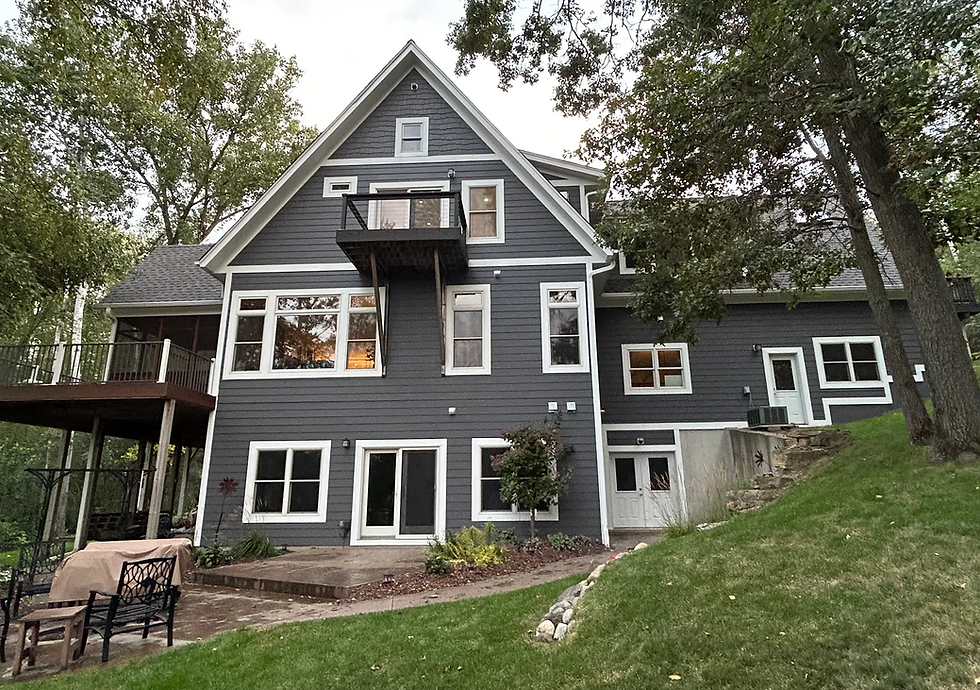


Interior painting can completely redefine a space when done with the right materials and skilled hands. High-quality paint and proper preparation ensure a finish that lasts and looks flawless over time.